
The Best Family Adventure Board Games to Play Right Now
Family adventure board games bring together exploration, teamwork, and storytelling in a way that works for every age at the table. Whether you have a 5-year-old just learning to take turns or a 12-year-old ready for complex strategy, there’s a game designed for your family.
Quick picks by age and style:
| Game | Best For | Players | Time |
|---|---|---|---|
| The Quest Kids | Ages 5+, competitive + kind | 2-4 | 30-45 min |
| Ghost Fightin’ Treasure Hunters | Ages 5+, pure co-op | 2-4 | 30 min |
| Forbidden Island | Ages 8+, strategy | 2-4 | 30 min |
| Stuffed Fables | Ages 7+, storybook | 2-4 | 60 min |
| Trekking the World | Ages 10+, globe-trotting | 2-5 | 30-60 min |
| CoraQuest | Ages 5+, dungeon crawl | 1-4 | Varies |
| Zombie Kidz Evolution | Ages 5+, legacy | 1-4 | 30 min |
| Trailblazers | Ages 8+, travel-friendly | 1-8 | 30 min |
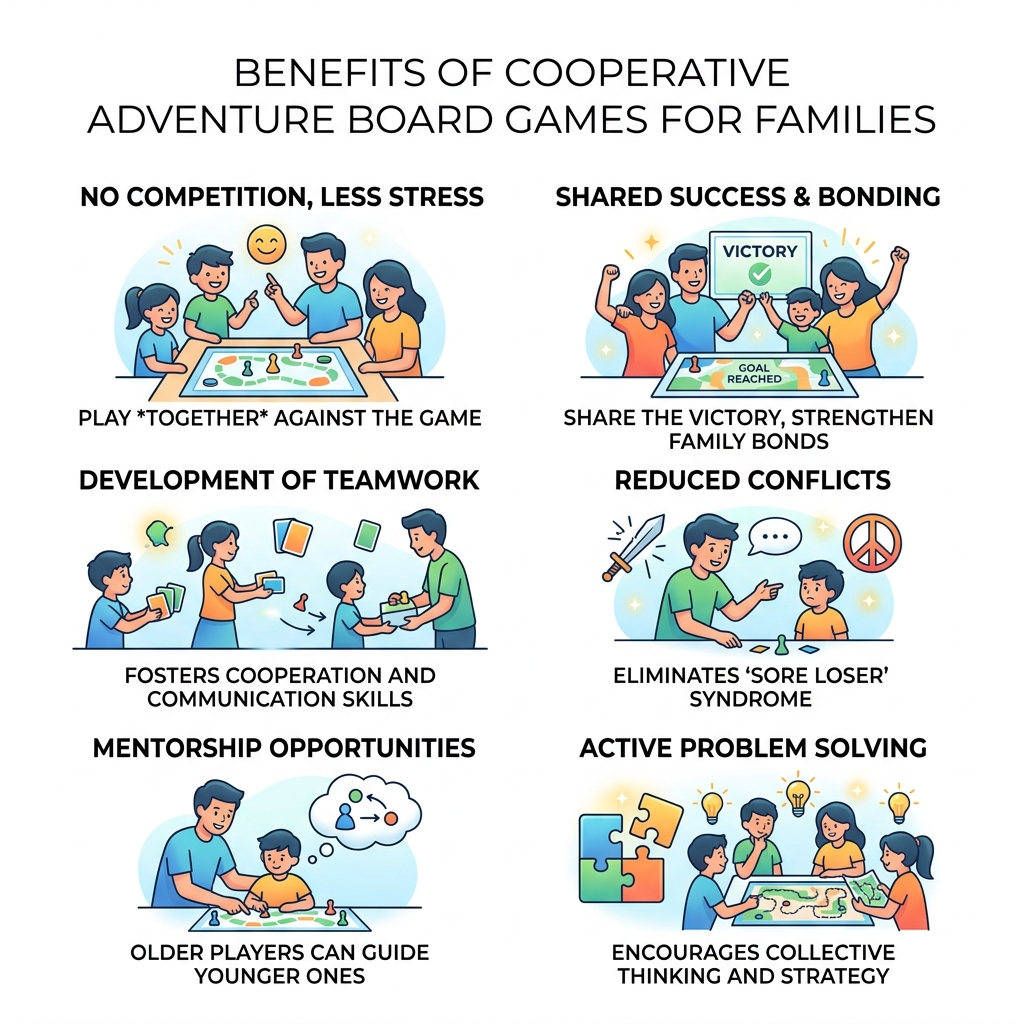
One of the biggest frustrations with family game night? Competition. When one player wins and another loses, tears and tantrums can follow — especially with mixed ages. That’s where adventure-themed cooperative games shine. Everyone plays together against the game itself, not against each other.
Over 10,000 families already play The Quest Kids alone. The genre has exploded because parents and kids genuinely both enjoy these games — not just the kids.
This guide covers the top picks, what makes each one special, which games grow with your child, and how to pick the right one for your family.
Why Cooperative Play Defines the Best family adventure board games
When we sit down for a family game night, the goal is bonding, not a battle of wills. This is why cooperative mechanics have revolutionized family adventure board games. In a cooperative setting, the “enemy” is the board itself—a sinking island, a haunted house, or a horde of zombies.
For mixed-age families, this is a game-changer. It eliminates the “sore loser” or “poor winner” syndrome that can derail an evening. Instead of a 10-year-old crushing a 6-year-old in a strategy game, the older child becomes a mentor. This leads to a unique dynamic often called “coaching.” Because most cooperative games feature open information (where everyone can see each other’s cards or positions), parents can guide children through difficult choices without “cheating” or ruining the fun.
While some hobbyists worry about “quarterbacking”—where one dominant player tells everyone else what to do—in a family context, this is actually a teaching tool. It allows us to model logical thinking and risk assessment. According to experts at Tabletop Bellhop, these games are ideal because they allow adults to play at their full capacity to save the team, while kids learn the ropes in a safe, supportive environment. Check out our family friendly board game review guide for more tips on managing these dynamics.
Top family adventure board games for Early Explorers (Ages 4-7)
For the youngest adventurers, the best games focus on tactile components and simple, intuitive goals. You want games that look like toys but play like adventures.
- The Quest Kids: This game is a standout for its “Competitive with Kindness” mechanic. While players do collect stars to see who performed the best quest, they are actively rewarded for helping their teammates. If you help a friend defeat a monster, you earn a “Kind Kid” card, which provides powerful boosts later. It’s a brilliant way to introduce competition without the sting. You can find more about this gem at The Quest Kids Board Game.
- Ghost Fightin’ Treasure Hunters: Often cited as one of the best kids’ games ever made, this is a pure cooperative experience. Players move through a house collecting jewels while trying to keep ghosts from “haunting” rooms. If too many rooms become haunted, everyone loses. It’s tense, exciting, and the ghost figures are wonderfully spooky without being scary.
- Robot Turtles: Originally a massive Kickstarter success, this game teaches the fundamentals of programming through adventure. Kids “code” their turtle’s movement to reach a prize, while parents act as the “computer,” executing the moves and making silly sound effects.
- Outfoxed: A cooperative whodunit. Kids move across the board to gather clues and eliminate suspects. It’s a perfect introduction to logic and deduction for the kindergarten set.
For more ideas on starting your collection, see our list of the best indie board games for kids 2026.
Advanced family adventure board games for Junior Questers (Ages 8-12)
As children grow, they crave more agency and deeper stories. The family adventure board games in this category introduce “campaign” play—where the story continues from one session to the next—and more complex logic.
- Forbidden Island: Designed by Matt Leacock (the mind behind Pandemic), this is the “gold standard” for family co-ops. Players are adventurers on a sinking island trying to collect four treasures and escape via helicopter. The tension rises as tiles literally flip over and “sink” out of the game. It’s highly scalable; you can start on “Novice” and work your way up to “Legendary” difficulty.
- Stuffed Fables: This is a “storybook game” where the board is actually a book. You read a page of the story, and the opposite page is the map where you play. It follows a group of stuffed animals protecting their child from nightmares. It’s emotionally resonant and teaches great lessons about bravery.
- Trekking the World (Second Edition): For families who love geography, this game is a must. You travel to 48 real-world destinations, collecting souvenirs and visiting wonders. It’s a great way to spark curiosity about the planet. Explore the details at Trekking the World.
- Trekking the National Parks: Similar to its global counterpart, this focuses on the 63 US National Parks. It was created by a family who actually visited every park, and that passion shows in the gameplay. Learn more at Trekking the National Parks.
If your kids are ready for even more variety, browse our best indie board games for kids 2026-2 guide.
Engaging Mechanics: From Storytelling to Programmed Movement
What makes a board game feel like an “adventure” rather than just a puzzle? It’s all in the mechanics. Modern family adventure board games use clever systems to keep everyone engaged.
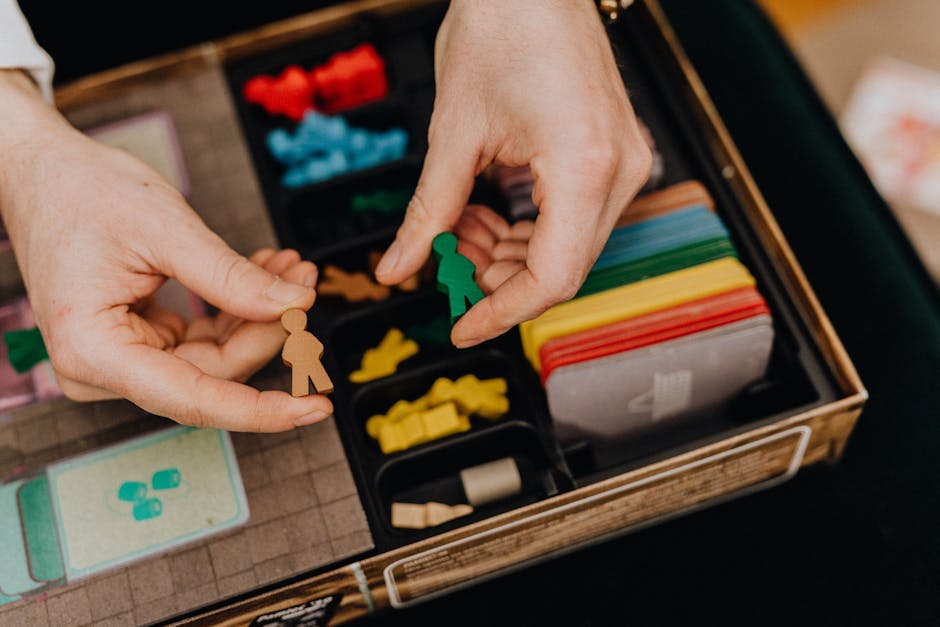
One of our favorite examples is CoraQuest. This game was born during a lockdown as a homeschooling project between a father and his 8-year-old daughter. It’s a dungeon crawler where players explore tiles, fight monsters, and rescue gnomes. What makes it special is the “narrative choices”—the game often asks players to make decisions that affect the story. You can learn how to get started at CoraQuest.
Another engaging mechanic is “programmed movement,” seen in games like Robot Turtles or Quirky Circuits. Instead of moving a piece instantly, you lay down a sequence of cards (Move Forward, Turn Right, Move Forward) and then “run” the program. This forces kids to visualize outcomes and plan ahead, which is a core skill for both gaming and real life.
Dungeon-crawling and storytelling also thrive in games like Dungeons & Dragons Adventure Begins. While simpler than the “adult” version of D&D, it prompts kids to tell stories about how they defeat monsters, turning a mechanical dice roll into a creative moment. For a look at the newest trends in these mechanics, check out the latest tabletop games for families.
Customization and Portability: Taking the Adventure Further
A great adventure shouldn’t be confined to the living room. Many families are looking for family adventure board games that can travel to a campsite, a hotel, or a grandparent’s house.
Trailblazers is a fantastic example of a portable adventure. It’s a route-building game where you draft cards to create hiking, biking, and kayaking trails. It comes in various editions, including a “Travel Edition” and a “Pocket Edition” that can fit in a small bag. The “Sasquatch Expansion” even adds a cooperative mode where you work together to track the mythical beast. Check out the different versions at Trailblazers | Allplay.
The Power of Legacy Elements
Another way to extend the life of a game is through “Legacy” mechanics. In Zombie Kidz Evolution, the game actually changes the more you play. You start with simple rules, but as you complete missions, you earn stickers to put on the board and open sealed envelopes that contain new rules, new powers for your heroes, and even new types of zombies. This “difficulty scaling” is perfect for families because the game grows in complexity at the same rate the child grows in skill.
For families who want to find these types of evolving experiences, we recommend looking into best hidden gem board games for families. These often offer unique ways to customize your play experience, such as adding expansions or using home-brew rules to make the adventure last for years.
Conclusion
At iBest Health Insurance, we believe that family wellness extends beyond physical health—it’s about the mental and emotional bonds we build during shared activities. Family adventure board games offer a unique, screen-free way to foster those connections, teaching children resilience, teamwork, and the joy of a shared story.
Whether you are fending off ghosts in a haunted mansion or trekking through the majestic National Parks, the memories made around the table are the real treasure. For more inspiration on the future of family gaming, don’t miss our look at new indie board games for families 2026.
How do I introduce young kids to adventure games without frustration?
The key is to focus on the theme rather than the math. If a child is excited about being a “brave knight” or a “space explorer,” they will be more patient with the rules. Use “open-hand” play where everyone’s cards are visible, allowing you to coach them through their turn. Don’t be afraid to simplify rules for the first few games—for example, in Ghost Fightin’ Treasure Hunters, you can play without the “locked door” cards until the kids get the hang of movement.
Which adventure games grow with my child’s skill level?
Games with “Legacy” or “Campaign” mechanics are your best bet. Zombie Kidz Evolution is the premier choice here, as it literally evolves over dozens of sessions. Forbidden Island is also excellent because of its adjustable difficulty levels. Even a game like Flash Point: Fire Rescue works well; you can start with the “Family Rules” and gradually introduce advanced concepts like hazardous materials and structural damage as your children become expert firefighters.
Are there adventure games suitable for travel?
Absolutely. Trailblazers offers a pocket edition specifically for this purpose. Many card-based adventure games like The Crew: Family Adventure or Forbidden Island have relatively small footprints and can be packed into travel cases. For more ideas on portable play, you can find more info about family-friendly board game reviews on our site, where we highlight games that are easy to take on the go.
