
The Best Strategy Games for Families: Quick Picks for Every Game Night
The best strategy games for families are ones that hit a sweet spot — easy enough to learn quickly, deep enough to keep everyone engaged, and fun for both kids and adults. Here are the top picks to get you started:
Top Family Strategy Games at a Glance:
| Game | Best For | Players | Playtime |
|---|---|---|---|
| Ticket to Ride | All ages | 2-5 | 30-60 min |
| Carcassonne | Ages 12+ | 2-5 | 30-45 min |
| Wingspan | Teens + adults | 1-5 | 45-75 min |
| Kingdomino | Younger kids | 2-4 | 15-20 min |
| Qwirkle | Ages 6+ | 2-4 | 30-45 min |
| Cascadia | All ages | 1-4 | 30-45 min |
| Stone Age | Teens + adults | 2-4 | 60-90 min |
| Ark Nova | Teens + adults | 1-4 | 90-150 min |
Game nights are one of the easiest ways to pull a family away from screens and into the same room — actually talking, laughing, and thinking together.
But picking the right game? That’s where it gets tricky.
Walk into any game store and you’ll face dozens of boxes with bold claims. Too simple and the teenagers check out. Too complex and the younger kids get lost. Too luck-heavy and nobody feels like strategy actually matters.
The good news: there’s a genuinely great family strategy game for almost every situation — whether you’ve got teenagers who love a challenge, younger kids who need simple rules, or a mixed group that just wants 45 minutes of fun without a rulebook headache.
This guide cuts through the noise and gives you real, field-tested recommendations based on player counts, age ranges, playtime, and theme.
Why Strategy Games are Essential for Family Development
When we sit down to play a strategy game, we aren’t just “killing time.” We are actually engaging in a high-level workout for the brain. Research into child development shows that enriching play experiences actually help grow the cerebral cortex—the part of the brain responsible for perceiving, thinking, and language.
Brain Development and Executive Function
Strategy games are like a gymnasium for the prefrontal cortex. Every time a child has to plan three moves ahead or decide whether to save their resources or spend them, they are building neural pathways for executive function. This includes impulse control, working memory, and mental flexibility. Unlike luck-based games where a dice roll decides your fate, the best strategy games for families require players to weigh options and anticipate consequences.
Boosting Immunity and Reducing Stress
It sounds like a tall tale, but board games can actually be good for your physical health. Engaging in play that triggers laughter and positive social interaction releases stress-fighting chemicals in the body. By fostering a sense of gratitude and togetherness, these games can actually give the immune system a slight nudge in the right direction. Plus, for busy parents, board games offer a structured alternative to “pretend play,” which can often feel exhausting after a long workday.
Social-Emotional Intelligence
Games are a safe “sandbox” for failing. Learning how to lose gracefully—and how to win without gloating—is a vital life skill. Collaborative strategy games are particularly good for younger children who might struggle with the sting of competition, as they allow the whole family to win or lose as a single team. To learn more about how to evaluate these games for your specific household, check out our family-friendly board game review guide.
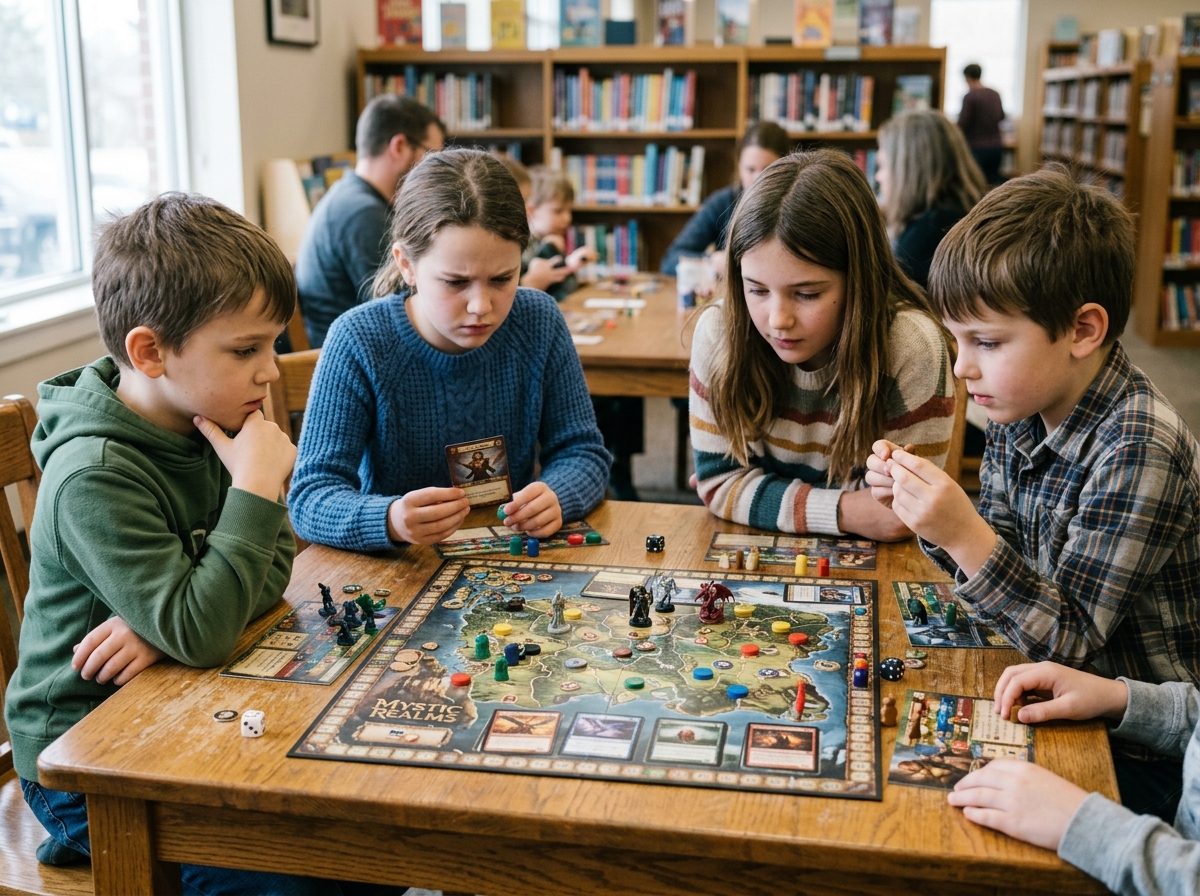
Choosing the best strategy games for families: Key Selection Criteria
Not every high-rated game on BoardGameGeek is a good fit for a Tuesday night with the kids. When we look for the best strategy games for families, we use a specific set of criteria to ensure the experience stays fun rather than frustrating.
1. The “No-Violence” Rule
For many families, the goal is to find engaging themes that avoid combat or controversial content. We look for games centered around nature (like Cascadia), building (like Carcassonne), or even running a zoo (like Ark Nova). These themes are universally appealing and keep the focus on creation rather than destruction.
2. Manageable Playtime
The “sweet spot” for family play is usually between 30 and 60 minutes. While some heavy strategy games can last three hours, those are often better saved for a dedicated hobby night. For a standard family evening, you want a game that can be set up, played, and packed away before bedtime.
3. Player Count and Scalability
Many families have 4 or 5 members, yet many “hobby” games only cater to 4 players. We prioritize games that either support 5 players out of the box or have readily available expansions to accommodate larger groups. If you find a game you love but need more room, you might want to look into the best family board game expansion packs.
4. Mechanic Familiarity
The most successful family games use proven mechanics that are easy to grasp:
- Worker Placement: Placing a piece to “claim” an action (e.g., Stone Age).
- Tile-Laying: Building a map as you go (e.g., Carcassonne).
- Resource Management: Collecting wood, brick, or grain to build something bigger (e.g., CATAN).
The best strategy games for families with Teenagers
Teenagers often crave more depth. They want to feel like their decisions truly matter and that they can outsmart their parents.
- Wingspan (2019): This is a modern phenomenon. It ranks #13 in BoardGameGeek’s Top 100 for a reason. With a beautiful bird-collecting theme and a 8.1/10 rating, it offers a “medium-weight” challenge that teenagers find incredibly satisfying.
- Ark Nova (2021): If your teens are ready for a step up, Ark Nova is the current gold standard. It features a zoo-building theme and ranks #8 on the global leaderboards. It’s non-violent but offers deep strategic layers.
- Brass: Birmingham: For the family that wants to dive into the deep end, this is currently #2 on BoardGameGeek. It’s a game of industrial strategy that rewards long-term planning and is perfect for teens who enjoy complex systems.
If you are looking for something a bit more unique, you can explore new indie board games for families.
The best strategy games for families with Younger Children
For families with kids aged 6 to 10, the focus should be on visual appeal and “hidden” learning.
- Kingdomino: This is a brilliant twist on dominoes. You are building a kingdom by matching terrain types. It’s fast (15-20 minutes) and teaches spatial awareness and basic multiplication for scoring.
- Qwirkle: A tactical matching game that supports 2-4 players. It’s simple enough for a 6-year-old but has enough tactical depth to keep adults from getting bored.
- Takenoko: This game features a giant panda and a gardener in a Japanese bamboo garden. The components are adorable, which helps keep younger players engaged even as they learn the basics of objective-based strategy.
For more off-the-beaten-path suggestions, see our list of best hidden gem board games for families.
Top-Rated Tabletop Strategy Games for Every Age
Some games are classics for a reason—they bridge the gap between different age groups perfectly.
The Modern Classics
Ticket to Ride is perhaps the ultimate “gateway” strategy game. It supports 2-5 players and plays in under an hour. The goal is simple: connect cities with train routes. It’s easy to learn but requires constant pivoting as your opponents block your paths.
Splendor and 7 Wonders are also frequent recommendations. Splendor is a pure “engine builder” where you collect gems to buy cards that make future purchases cheaper. 7 Wonders uses a card-drafting mechanic that allows up to 7 people to play simultaneously without the game taking any longer.
The Worker Placement Entry Point
Stone Age is often cited by the gaming community as the perfect introduction to “worker placement.” You manage a tribe of prehistoric people, deciding who goes to hunt for food and who stays to build huts. It’s a great way to teach resource management without the complexity of more “hardcore” titles.
The Classics Reimagined
For many, the journey into strategy starts with Family Edition | CATAN. This version is specifically designed to be accessible, with a quick 15-minute learning curve and a reversible board that keeps the game fresh every time you play. It emphasizes trading and negotiation, making it a highly social experience.
If your family prefers working together rather than against each other, The Crew Cooperative Board Card Game is a must-have. It’s a trick-taking card game where players must communicate (limitedly!) to complete specific missions in deep space.
Digital Strategy: Apps and Consoles for Modern Families
Sometimes, you don’t want to clear the dining room table or worry about losing small wooden pieces. Digital adaptations have become a fantastic way to enjoy the best strategy games for families on the go or during a rainy afternoon.
Console Gaming for the Family
The Nintendo Switch has become a hub for digital board games. Family Chess Definitive Edition for Nintendo Switch takes the world’s oldest strategy game and gives it a vibrant, cartoon-themed coat of paint. With five difficulty levels, it allows kids to practice against an AI before challenging their parents to a local multiplayer match.
Strategy in Your Pocket
Many of the best physical games have perfect digital ports. The Kingdomino: The Board Game App is a faithful recreation of the award-winning tile game. Digital versions often include tutorials that make learning the rules much faster than reading a manual. They also handle all the complex scoring automatically—no more arguments over who actually won!
For families on the move, “micro-strategy” games like Mini Motorways or Thronefall offer deep tactical satisfaction in sessions as short as 10 minutes. These are perfect for busy parents who want a quick strategic fix between work and family life. You can find more modern tech-focused options in our guide to the latest tabletop games for families.
Frequently Asked Questions about Family Strategy Games
Should we prioritize cooperative or competitive strategy games?
It depends on your family dynamic! Competitive games (like CATAN or Ticket to Ride) are great for teaching resilience and strategic pivoting. However, if you have a “sore loser” in the house, cooperative games (like The Crew or Pandemic) are excellent because they focus on communication and collective problem-solving. In a co-op game, everyone wins or loses together, which can reduce the stress of game night.
What is the ideal playtime for a family game night?
For most families, 30 to 60 minutes is the “Goldilocks” zone. It’s long enough to feel like a significant activity but short enough to keep the attention of younger children or tired parents. Games like Cascadia (30-45 mins) or Kingdomino (20 mins) are perfect for weeknights, while longer games like Wingspan (60+ mins) might be better for a weekend afternoon.
How do I introduce complex strategy games to younger kids?
Start with “gateway” games that share mechanics with the harder ones. If you want them to eventually play Agricola, start with Stone Age. If you want them to play Carcassonne, start with Kingdomino. Always explain the end-game scoring before you start, so kids understand what they are working toward. You can also find more tips on introducing games in our review guide for families.
Conclusion
At iBest Health Insurance, we believe that wellness goes beyond just physical checkups—it’s about the health of your family unit and your mental well-being. Strategy games are a powerful tool for cognitive health, social connection, and reducing the stress of daily life.
Whether you are building a railroad across America in Ticket to Ride, managing a prehistoric tribe in Stone Age, or matching colorful tiles in Qwirkle, you are investing in your family’s development. So, clear the table, put the phones away, and get ready to see if you can truly outsmart your kids.
For more tips on keeping your family healthy and happy, explore more info about our services.
