
What Are Thematic Games? A Quick Guide to Narrative-Driven Tabletop Play
Thematic games are board games where story, atmosphere, and immersion come first. Unlike abstract strategy games, they put you inside a world — whether that’s surviving WWI trenches, exploring a cursed continent, or fighting off an alien infestation in deep space.
Here’s a quick snapshot of what makes thematic games stand out:
| Feature | Thematic Games | Abstract/Euro Games |
|---|---|---|
| Core focus | Story and immersion | Efficiency and strategy |
| Conflict | Direct, dramatic | Indirect, economic |
| Luck | Common | Rare |
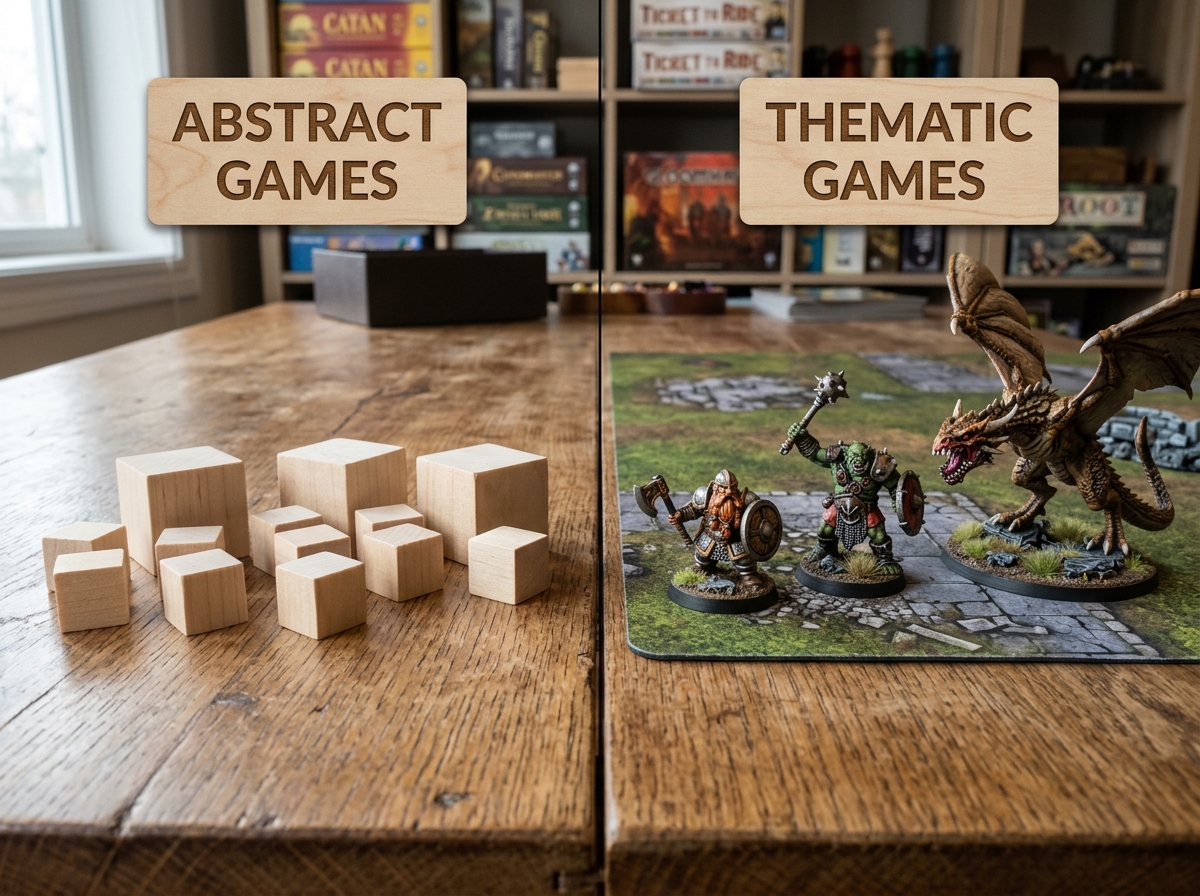
| Components | Detailed miniatures, art | Simple tokens, cubes |
| Playtime | 60 min to 10+ hours | 30–90 min |
| Examples | Gloomhaven, Pandemic Legacy | Catan, Ticket to Ride |
The thematic game category spans everything from quick 30-minute co-ops like The Grizzled (rated 1.98/5 complexity) to sprawling campaign behemoths like Gloomhaven (rated #2 on BoardGameGeek with over 66,000 votes). What they share is a commitment to making you feel something — tension, wonder, grief, triumph.
If you’re a board game hobbyist trying to figure out which thematic game is worth your time and money, you’re in the right place. This guide breaks down the best titles, what sets them apart, and how to pick the right one for your group.
Defining Thematic Games: Mechanics vs. Narrative
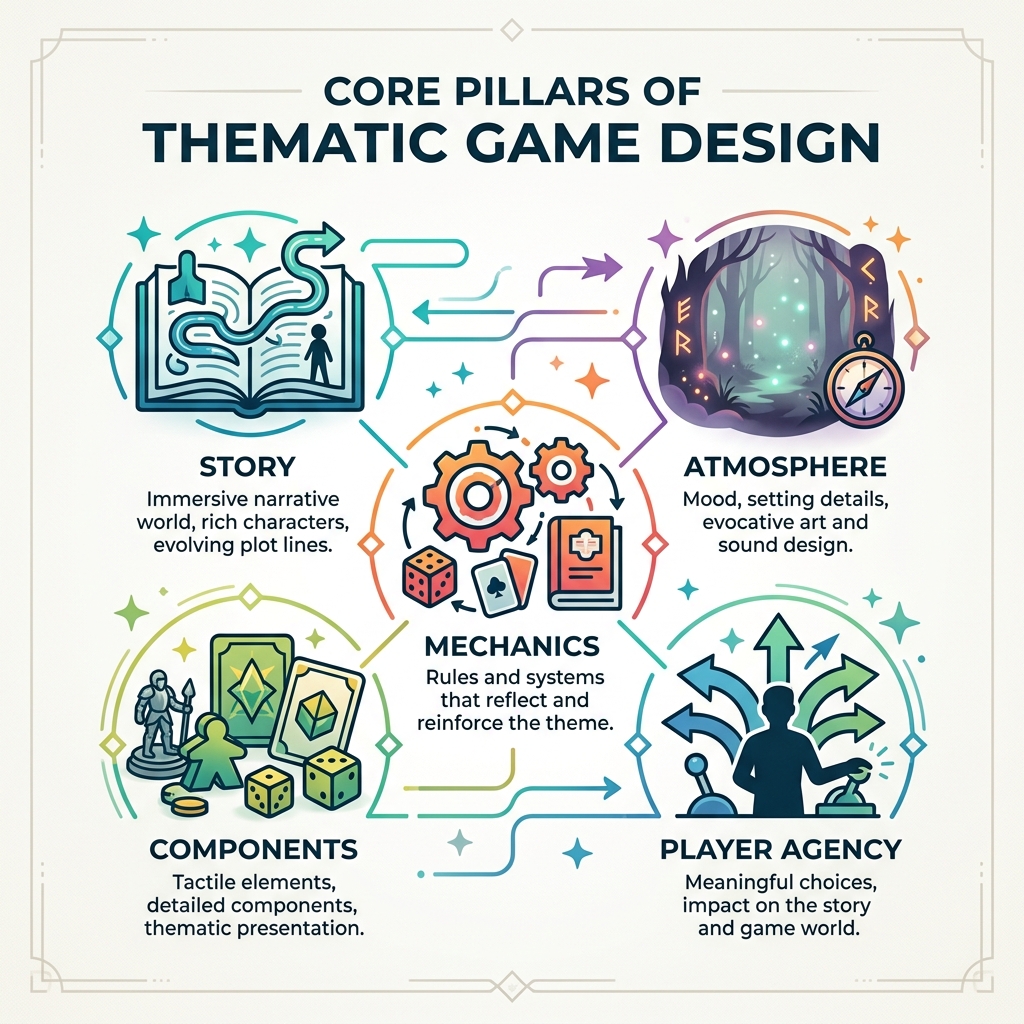
When we talk about thematic games, we are describing a design philosophy where the “flavor” of the game—the story it tells—is the engine that drives everything else. In many other genres, you could swap the art from a medieval village to a space station and the game would play exactly the same. In a truly thematic experience, the mechanics are inseparable from the story.
Theme-Forward Design and Emotional Resonance
In a theme-forward game, we don’t just “collect red resources.” We “scavenge for medical supplies in a ruined pharmacy while dodging zombies.” This shift in language reflects a shift in design. The goal is emotional resonance. When you play a game like This War of Mine, you aren’t just trying to win; you are trying to survive a harrowing emotional ordeal. The mechanics are often “messy” because life is messy.
Mechanics vs. Flavor
While a Eurogame might prioritize perfect balance and “fairness,” thematic games often lean into high-variance moments. This is where “flavor” becomes gameplay. If your character is “clumsy” in the story, the mechanics might force you to reroll successful dice. This integration makes the world feel alive. For a deeper look at how some titles push the boundaries of setting, check out our review of board games with unique themes.
How Thematic Games Differ from Eurogames
The divide between “Euros” and “Thematic” games (sometimes historically called Ameritrash) usually comes down to three things: luck, conflict, and asymmetry.
- Luck Factor: We often see dice rolling or card draws in thematic titles. Why? Because in a story about a dragon fight, there should be a chance of failure. It creates drama that a predictable math puzzle can’t replicate.
- Player Conflict: While many Eurogames feature “multiplayer solitaire” where players barely interact, thematic games thrive on direct confrontation. Whether it’s a rebel fleet attacking a Death Star or a traitor in a hidden-role game, the conflict is the point.
- Asymmetric Abilities: In a thematic game, we rarely start on equal footing. One player might be a powerful wizard while another is a sneaky thief. This asymmetry is explored deeply by designers like those at Thematic Games, where the roles define the strategy.
The Role of Components in Immersion
We cannot ignore the “toy factor.” High-quality components act as a bridge between the rules and our imagination. When we see a detailed miniature of a Xenomorph on the board, the tension rises naturally.
Publishers like those found in the Asmodee thematic collection dominate this space by providing custom dice, evocative flavor text on every card, and sprawling board art. These elements aren’t just “eye candy”; they provide the visual cues necessary for us to lose ourselves in the narrative.
The Top 10 Thematic Games According to BoardGameGeek
The community at BoardGameGeek (BGG) has spent decades refining the rankings for this category. These games are often judged on how well they transport players to another world.
| Game Title | BGG Thematic Rank | Average Rating | Complexity (Out of 5) | Playtime |
|---|---|---|---|---|
| Pandemic Legacy: Season 1 | #1 | 8.358 | 2.83 | 60 Min |
| Gloomhaven | #2 | 8.281 | 3.90 | 60-120 Min |
| Star Wars: Rebellion | #3 | 8.41 | 3.74 | 180-240 Min |
| Gloomhaven: Jaws of the Lion | #4 | 8.44 | 3.63 | 30-120 Min |
| War of the Ring: 2nd Ed | #5 | 8.51 | 4.21 | 150-180 Min |
| Frosthaven | #6 | 8.75 | 4.29 | 30-120 Min |
| Nemesis | #7 | 8.31 | 3.44 | 90-180 Min |
| Spirit Island | #8 | 8.30 | 4.07 | 90-120 Min |
| Dune: Imperium | #9 | 8.35 | 3.03 | 60-120 Min |
| Mage Knight | #10 | 8.09 | 4.36 | 60-240 Min |
Note: Rankings based on Geek Rating which factors in total voter count. For example, Gloomhaven has over 66,000 voters, while newer titles like Frosthaven have fewer but higher average scores.
Why Thematic Games Excel at Tension and Atmosphere
Games like Nemesis or Kingdom Death: Monster are masters of the “emergent narrative.” In Nemesis, you aren’t just moving a pawn; you are desperately trying to fix an engine while hearing “noise” in the vents. The mechanic of drawing noise tokens creates a visceral sense of dread.
Similarly, hidden agendas add a layer of social tension. Is your teammate helping you, or do they have a secret goal to ensure you don’t make it back to Earth? This psychological play is a hallmark of the genre. For more on how these worlds are built, see our latest fantasy board games review.
Complexity and Playtime Variations
We should be honest: thematic games can be a commitment. While a game like The Grizzled is a “light” weight of 1.98/5, many top-tier titles require hours of setup and rules learning. Tapestry from Stonemaier Games attempts to bridge this gap, offering a 90-120 minute “civ-building” experience that feels epic without requiring a whole weekend to play.
The “weight” or complexity rating on BGG is a great tool for us to gauge if a game is a “beer and pretzels” night or a “read the 50-page manual” night.
Immersive Worlds: Legacy, Campaigns, and Evocative Themes
The most significant trend in thematic games over the last decade is the rise of the “Legacy” and “Campaign” format. These games don’t just end when the box is closed; they remember what you did.
The Rise of Persistent Worlds
In Pandemic Legacy: Season 1, you might permanently scratch off a character’s ability or place a sticker on the map that changes a city forever. This creates a high-stakes environment where your choices have long-term consequences.
Games like The 7th Continent take a different approach, using a “save system” that feels like a classic video game. You explore a massive, cursed land by laying down numbered cards, and you can “pause” your adventure and pack it away, only to resume exactly where you left off. You can see how this works in The 7th Continent presentation.
The Emotional Impact of Historical and War Themes
Not all thematic games are about space marines or wizards. Some of the most evocative titles handle heavy historical subjects.
- The Grizzled: A cooperative game about friends trying to survive the trenches of WWI. It focuses on “solidarity” and “psychological stress” rather than killing enemies. With over 15,000 ratings and a thematic rank of #153, it is a masterclass in emotional game design.
- This War of Mine: Based on the video game, it puts you in the shoes of civilians in a besieged city. It is famously difficult and emotionally draining, forcing you to make impossible moral choices.
- 51st State: A post-apocalyptic card game that uses “contact,” “conquer,” or “incorporate” mechanics to simulate rebuilding a civilization in a wasteland.
Cooperative Adventures for Groups
If your group prefers working together against the “AI” of the board, there are fantastic options. Horrified lets us take on classic Universal Monsters like Dracula or the Wolfman in a accessible, highly thematic romp. For those looking for something more niche, check out our underrated fantasy board games review for titles that might have flown under your radar.
Choosing the Right Thematic Game for Your Group
With so many options, how do we choose? It often comes down to the “hook.”
The Power of Licensed IPs
Sometimes, we want to play in a world we already love. Licensed games have come a long way from the “reskinned Monopoly” days.
- Star Wars: Star Wars: Rebellion is often called “Star Wars in a box,” perfectly capturing the cat-and-mouse game between the Empire and the Rebels.
- Dune: Dune: Imperium blends deck-building with worker placement to simulate the political intrigue of Arrakis.
- Lord of the Rings: War of the Ring is the definitive “epic” experience for Tolkien fans.
If you are looking for a curated “best of” list, this top 10 thematic games list is a great starting point for group discussions.
Emerging Thematic Games to Watch in 2024-2025
The horizon is bright for fans of story-driven play. We are seeing a move toward more “approachable” thematic games. Funfair, for instance, offers a light-to-medium strategy experience where you build a theme park in under an hour. It’s a “friendly” introduction to tableau building with vibrant art. You can find more Funfair game details if you want a break from the “grimdark” settings of other thematic titles.
Dominant Publishers and Designers
If you find a game you love, it’s worth looking at who else that publisher or designer has worked with.
- Stonemaier Games: Known for high production values (Tapestry, Scythe).
- Awaken Realms: Masters of dark, atmospheric campaigns (Nemesis, Tainted Grail).
- Fantasy Flight Games: The kings of licensed IPs (Star Wars, Marvel, Arkham Horror).
- Serious Poulp: The creators behind the innovative exploration mechanics of The 7th Continent on BGG.
Frequently Asked Questions about Thematic Games
What is the highest-rated thematic game of all time?
Pandemic Legacy: Season 1 currently holds the top spot on BoardGameGeek’s thematic list with a 8.358 rating. However, Frosthaven actually has a higher average rating (8.75), but because it is newer, it has fewer total votes (around 9,700 compared to Pandemic’s 56,000+).
Can thematic games be played solo?
Absolutely. In fact, many people prefer playing them solo to fully soak in the story without distractions. Games like The 7th Continent, Sleeping Gods, and Mage Knight are often cited as the gold standard for solo thematic play.
What is the difference between “Ameritrash” and thematic games?
“Ameritrash” is an older, colloquial term used by hobbyists to describe games that originated in the US market, characterized by plastic miniatures, direct player conflict, and dice-heavy combat. Over time, the term has been largely replaced by the more positive “Thematic Games,” which acknowledges that these games are about narrative depth, not just “trashy” luck.
Conclusion
The world of thematic games shows how tabletop play can create memorable stories, whether you are navigating the pressure of Pandemic Legacy or the emotional challenges of The Grizzled. These games highlight cooperation, decision-making, and the value of spending meaningful time with others around the table.
At iBest Health Insurance, we recognize that hobbies and shared experiences can play an important role in overall well-being and connection. Whether you enjoy deep campaign games, quick co-op sessions, or immersive licensed adventures, we hope this guide helps you choose a thematic game that fits your group. Explore more at iBest Health Insurance for additional lifestyle and wellness-related insights.
