
The Ultimate Checklist for Hiring Your International Expansion Dream Team
Why Choosing the Right Company Formation Provider Can Make or Break Your Global Expansion
Knowing how to choose a company formation provider for international expansion is one of the most important decisions you’ll make when taking your business global.
Setting up a subsidiary or branch in a foreign country isn’t like registering a business at home. Rules vary wildly from country to country. Many nations require local directors, physical addresses, or specific capital deposits just to get started. Get it wrong, and you’re looking at delays, fines, or a structure that falls apart under regulatory scrutiny.
Here’s a quick overview of what to look for:
- Global experience – Does the provider have proven expertise in your target market(s)?
- Service range – Do they cover incorporation, banking, compliance, and post-setup support?
- Transparent pricing – Are costs and timelines clearly stated upfront?
- Technology – Do they offer a centralized platform to track filings and compliance?
- Local knowledge – Do they have in-country partners, registered agents, or nominee services?
- Track record – Can they show real client results, case studies, or references?
- Post-incorporation support – Do they help with HR, tax, payroll, and annual filings after setup?
The right provider turns a complex, multi-step process into a manageable project. The wrong one can leave you exposed to compliance gaps that are expensive and slow to fix.
This guide walks you through exactly how to evaluate, compare, and select the best formation partner for your international expansion goals.
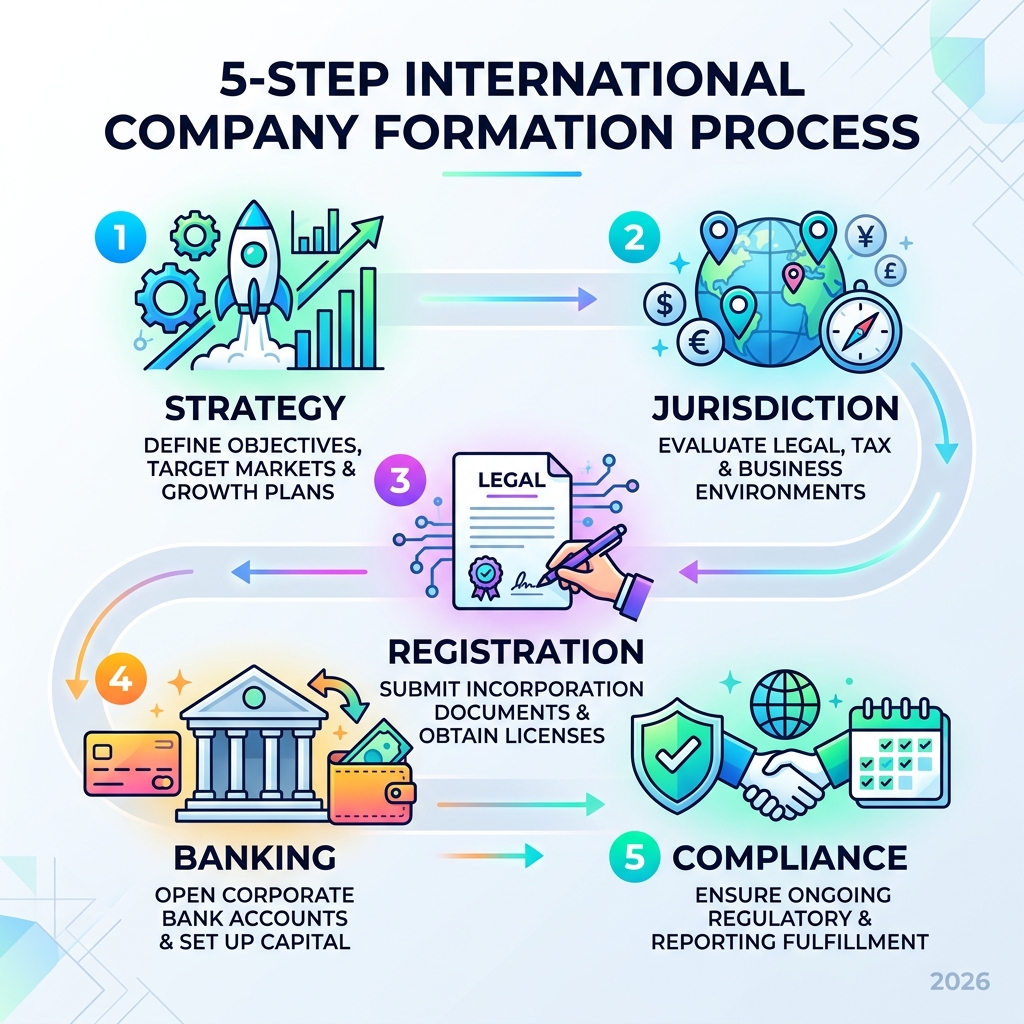
Why You Need a Specialized Partner for Global Growth

Expanding your business into international markets is a thrilling milestone, but it’s one that requires more than just a great product and a plane ticket. We have seen that the legal and operational groundwork is what truly determines whether a venture thrives or stalls. A specialized company formation provider acts as your navigator through the choppy waters of foreign regulations.
One of the primary reasons to seek a partner is the sheer variability of local laws. For instance, while you can register a business in some jurisdictions in 24 hours, others might take weeks of bureaucratic back-and-forth. A good provider helps you expand your market reach by establishing a legitimate legal presence, which is often a prerequisite for accessing new customer bases and building local credibility.
Beyond just “getting the paperwork done,” a specialized partner helps with:
- Talent Access: To hire the best local experts, you often need a compliant legal entity. This allows for global mobility and the ability to offer competitive local benefits.
- Tax Optimization: Many countries offer enticing incentives, such as R&D tax credits or special economic zones with reduced rates. A provider with deep knowledge can help you structure your entity to legally benefit from these programs.
- Liability Protection: By setting up a subsidiary, you create a separate legal entity. This means the parent company’s assets are generally protected from the subsidiary’s debts—a crucial safety net for any growing firm.
To ensure you haven’t missed a beat, we recommend referring to this International Company Formation Checklist to keep your strategy on track.
How to Choose a Company Formation Provider for International Expansion
When you start looking at how to choose a company formation provider for international expansion, you’ll realize that not all providers are created equal. Some are “form-fillers” who simply submit documents, while others are strategic partners who build “audit-ready” structures.
The first step in your selection process should be understanding what kind of structure you actually need. Your provider should be able to explain the pros and cons of different setups based on your specific business model.
| Feature | Subsidiary | Branch Office | Representative Office |
|---|---|---|---|
| Legal Status | Separate legal entity | Extension of parent company | Non-commercial entity |
| Liability | Limited to subsidiary assets | Parent company is fully liable | Parent company is fully liable |
| Taxation | Subject to local corporate tax | Subject to local tax on profits | Generally not taxed (no revenue) |
| Activities | Full commercial operations | Full commercial operations | Marketing and research only |
| Setup Speed | Moderate to Slow | Fast to Moderate | Very Fast |
A top-tier provider ensures you have a local presence that meets “substance” requirements. In many modern jurisdictions, simply having a “shell” company isn’t enough; you may need proof of operations, such as a physical address or local management, to open bank accounts or claim tax treaty benefits.
Assessing Global Experience: How to Choose a Company Formation Provider for International Expansion
The world is a big place, and regulatory nuances change at every border. When assessing a provider, look at their geographic footprint. Have they helped companies establish entities in 60, 80, or even 100+ countries?
Jurisdiction expertise is paramount. For example, some countries like Panama operate under a territorial tax system, while others like Estonia offer a unique digital e-Residency framework. If your provider only knows the US or the UK, they might miss the specific benefits—or pitfalls—of expanding into Southeast Asia or the EU.
Furthermore, ask about nominee services and local directors. Many countries require at least one director to be a local resident. If you don’t have a team on the ground yet, your formation provider should be able to provide a qualified nominee director who satisfies residency requirements without taking operational control of your business.
Key Questions for How to Choose a Company Formation Provider for International Expansion
During your initial consultations, don’t be afraid to grill potential partners. Their answers will tell you if they are truly experts or just reading from a script. We suggest asking:
- “Which business structure best aligns with our 5-year exit strategy?” (A provider should understand if you’re aiming for an IPO, acquisition, or steady long-term ownership).
- “What are the specific ownership restrictions for foreigners in this jurisdiction?” (Some countries restrict foreign ownership in specific sectors like telecommunications or energy).
- “How do you ensure banking success?” (Opening a corporate bank account is often the hardest part of expansion. A good provider has strong relationships with international banks and understands AML/KYC requirements).
- “What is the ongoing regulatory compliance burden?” (Ask about annual returns, audit requirements, and the “compliance calendar” you’ll need to follow).
Evaluating Service Comprehensiveness and Digital Tools
In 2025 and beyond, you shouldn’t be managing your global empire through a messy pile of spreadsheets and emails. The role of technology in streamlining the formation process cannot be overstated. When evaluating how to choose a company formation provider for international expansion, look for those who offer a centralized digital platform.
A high-quality platform should provide:
- Real-time Tracking: You should be able to see exactly where your application stands in the registration process.
- Document Storage: A “single source of truth” for your articles of incorporation, tax IDs, and board resolutions.
- Digital Signatures: The ability to sign documents electronically (where local laws allow) to avoid the “courier carousel.”
- AI-Driven Insights: Some modern providers use AI to analyze regulatory changes and alert you if a new law in a specific country affects your entity.
Comprehensive service means more than just a certificate of incorporation. It includes obtaining your Tax IDs (like VAT or GST), setting up your registered agent, and handling the initial bank account application. For startups specifically, balancing speed with legal durability is essential. You can find more on this in the guide to International Expansion for Startups and Compliance.
Post-Incorporation Support and Ongoing Compliance
The day you receive your incorporation documents is just the beginning. The “real work” of staying compliant starts on day two. A provider that disappears after the formation is complete is a major red flag.
Ongoing support should include:
- Compliance Calendars: Automated reminders for annual filings, tax deadlines, and license renewals.
- HR and Payroll Management: Ensuring your local employees are paid correctly and that all social security contributions are handled.
- VAT/GST Registration: Navigating the complex world of indirect taxes, especially if you are selling digital services across the EU or other regions.
- Annual Returns: Handling the mandatory yearly paperwork that keeps your company in “good standing” with local authorities.
Comparing Costs, Timelines, and Local Expertise
Price is always a factor, but in international expansion, the cheapest option is often the most expensive in the long run. When comparing providers, demand transparent pricing.
Watch out for hidden fees related to:
- Notary and apostille services.
- Courier fees for physical documents.
- Annual registered agent renewals.
- Banking introduction fees.
Timelines are equally critical. While some providers boast “24-hour registration,” this usually only applies to the simplest jurisdictions. A realistic provider will give you a tiered timeline: how long for the name check, how long for the filing, and—most importantly—how long for the bank account (which can often take weeks or even months).
Local expertise is the “secret sauce.” A provider with a physical office or a deep partnership in your target country will always navigate local bureaucracies faster than a call center thousands of miles away. They understand the “unwritten rules” and cultural norms that can speed up or slow down your entry.
Full-Service Providers vs. EORs: Selecting the Right Entry Strategy
One of the most common dilemmas we see is choosing between a full-service formation provider and an Employer of Record (EOR).
An EOR allows you to hire employees in a foreign country without setting up a legal entity. They become the legal employer on paper, handling payroll and compliance, while you manage the employee’s day-to-day work.
When to use an EOR:
- Market Testing: You want to hire 1-2 people to see if there’s interest in your product before committing to a full subsidiary.
- Speed: You can often “enter” a market in a matter of days.
- Low Headcount: It’s often more cost-effective if you only plan to have a tiny team.
When to choose a Company Formation Provider:
- Scalability: Once you hit a certain revenue threshold (often around $500k) or headcount (10+ people), having your own entity is usually cheaper and offers better tax benefits.
- Permanent Establishment (PE) Risk: If your employees are signing contracts or generating significant revenue, local tax authorities may decide you have a “permanent establishment” anyway, making an entity mandatory.
- IP Protection: Holding sensitive intellectual property is often safer within your own subsidiary.
Vetting Your Partner: Red Flags and Verification
Before you sign on the dotted line, perform your own due diligence. A provider’s website might look professional, but their actual service could be lacking.
Red Flags to Watch For:
- Lack of Transparency: If they can’t give you a clear breakdown of costs or a realistic timeline, walk away.
- Slow Communication: If it takes three days to get a response during the sales process, imagine how slow they will be when you have a compliance emergency.
- No Verified Local Presence: Be wary of providers who claim to cover 100 countries but have no physical offices or named partners in those regions.
- Vague Success Rates: Ask specifically about their success rate in opening bank accounts for non-resident founders.
How to Verify:
- Case Studies: Look for stories of companies similar to yours in size and industry.
- Client Testimonials: Check third-party review sites, not just the ones on their own homepage.
- References: Ask to speak with a current client who has expanded into your specific target jurisdiction.
Frequently Asked Questions about International Expansion
What are the main benefits of using a company formation provider?
A provider reduces the risk of non-compliance, speeds up market entry, and provides the “substance” (like local directors and addresses) needed for banking and tax benefits. They allow you to focus on your core business while they handle the complex legal “plumbing.”
How long does it typically take to incorporate a business abroad?
It varies wildly. In business-friendly jurisdictions like the UK or Estonia, it can take 24-48 hours. In more regulated markets or those with heavy bureaucracy, it can take 4 to 12 weeks. Opening a bank account usually adds another 2 to 8 weeks to the total timeline.
What is the difference between an EOR and a full-service formation provider?
An EOR hires people on your behalf without you needing an entity. A formation provider helps you build your own legal entity. EOR is great for testing; formation is better for long-term growth and tax optimization.
Conclusion
Choosing how to choose a company formation provider for international expansion is about finding a partner that aligns with your long-term vision. You aren’t just looking for someone to file a form; you’re looking for an advisor who ensures your global structure is legally durable, tax-efficient, and audit-ready.
By focusing on global experience, technological integration, and comprehensive post-incorporation support, you can build a solid foundation for your international “dream team.” The goal is sustainable growth, not just a quick setup.
As you expand your physical footprint and your team, don’t forget the most important asset: your people. Ensuring your global team has access to top-tier support is a vital part of your retention strategy. Secure your global team’s future with iBest Health Insurance and ensure that no matter where your expansion takes you, your team is protected and ready to build something great.
