
Expansion Packs or It Didn’t Happen: The Best Family Board Games
Why Expandable Family Board Games Are Worth Every Penny
Expandable family board games are board games designed so you can add more content — new maps, cards, rules, or story elements — to keep the experience fresh long after the box is opened.
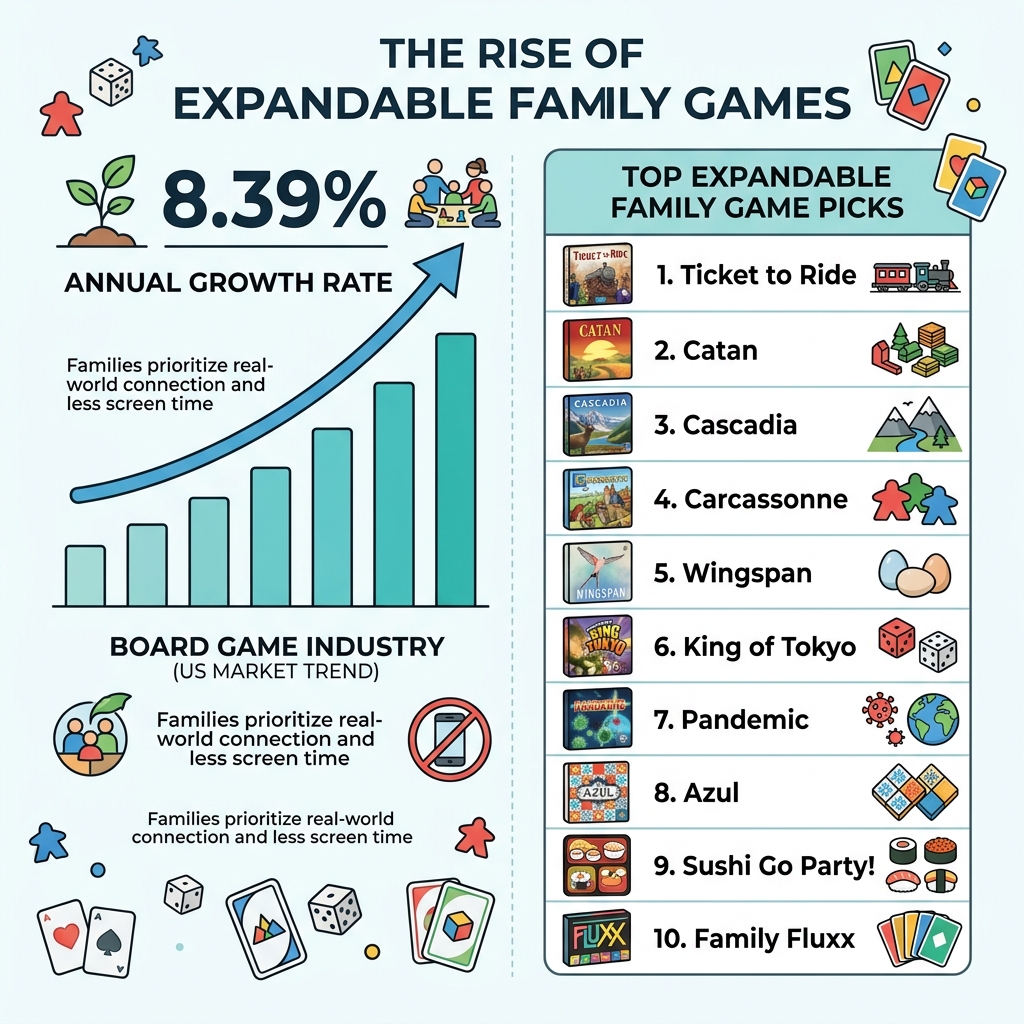
Quick answer: The best expandable family board games include:
- Ticket to Ride — dozens of map expansions, millions of copies sold
- Catan — famous Cities & Knights and Seafarers expansions
- Cascadia — 2022 Spiel des Jahres winner with the Landmarks expansion
- Carcassonne — tile-placement classic with a massive library of add-ons
- Wingspan — Oceania and other expansions add new birds and mechanics
- King of Tokyo — multiple expansions and reimplementations
- Pandemic — On the Brink and other expansions raise the stakes
- Azul — Crystal Mosaic and other variants keep things competitive
- Sushi Go Party! — an expanded version of Sushi Go with 20+ menu options
- Family Fluxx — ever-changing card game with many themed versions
The US board games market is expected to grow by $2.56 billion by 2025, with an annual growth rate of 8.39%. That’s not a coincidence. Families are actively pushing back on screens and looking for something real to gather around.
The problem? With over 6,000 expansion products available on Amazon alone, it’s genuinely hard to know which games reward the investment and which just add clutter.
This guide cuts through the noise. Whether you’re buying your first expandable game or deciding if a new expansion is actually worth it, you’ll find clear, honest answers here.
What Makes Expandable Family Board Games a Smart Investment?
When we look at our game shelves, we often see two types of boxes: the ones we played three times and retired, and the ones that have been “living” with us for a decade. Expandable family board games fall firmly into the second category. They are a smart investment because they solve the “boredom” problem without requiring you to learn a completely new set of rules from scratch.
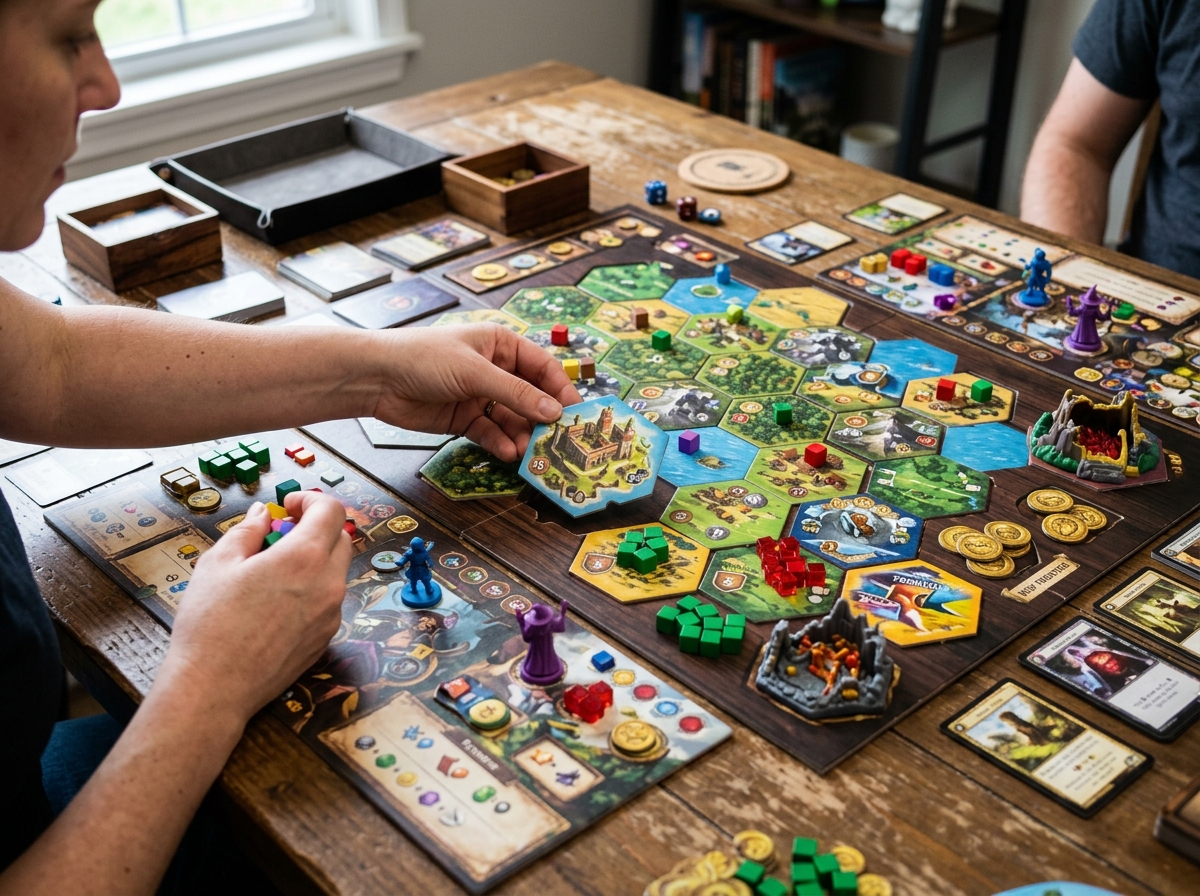
The primary benefit is replayability. By adding new modules, you aren’t just getting more of the same; you are altering the decision space. In game design, the decision tree refers to the number of choices a player has at any given time. A great family game keeps this tree manageable—usually just two or three choices—to remain accessible. However, as your family gets better at the game, expansions can branch that tree out, offering deeper strategy for those who want it.
Furthermore, these games offer scalable difficulty. You can play the “base” version when the cousins are over, but swap in the “expert” expansion cards for a more intense Friday night session. This flexibility is why sites like Mox Boarding House and Amazon have seen a surge in “Big Box” editions that bundle expansions together. If you are looking for games that have stood the test of time, check out our best hidden gem board games for families to see how some lesser-known titles use expandability to stay relevant.
Adapting to Growing Children with Expandable Family Board Games
One of the most rewarding aspects of this hobby is watching our children progress from simple “roll and move” games to complex strategy. Expandable family board games act as a bridge for this development. We call this “age progression.”
Instead of throwing away a game because it’s “too babyish,” an expansion can introduce “complexity creep” in a controlled way. For example, a child might start with the base version of a game at age six, but by age nine, they are ready for the expansion that adds resource management or hidden roles. This keeps the game challenging and prevents it from becoming a “dust collector.”
For parents, this is a form of “gamer-bingo”—the satisfaction of seeing your kids finally understand a mechanic that used to confuse them. If you’re looking for the best starting points for the little ones, our guide on best indie board games for kids 2026 highlights titles that grow alongside your family’s skill levels.
Strategy and Map-Based Expandable Family Board Games
Strategy games are the bread and butter of the expandable market. These games often use “map expansions” or “modular boards” to change the geography of the game, which completely resets the strategy.
- Ticket to Ride: With millions of copies in print, this is the gold standard. Once you’ve mastered the US map, you can buy expansions for Europe, Asia, or even the Heart of Africa. Each map adds a tiny twist—like tunnels or ferries—that keeps the 20-year-old formula feeling brand new.
- Cascadia: The 2022 Spiel des Jahres (the “Oscars of board games”) winner is a masterpiece of tile placement. Its Landmarks expansion allows for a 5th and 6th player and adds beautiful wooden landmarks that change how you score your wilderness.
- Catan: Formerly known as Settlers of Catan, this game essentially launched the modern hobby. The Cities & Knights expansion is widely considered essential by fans because it adds a layer of depth that turns a simple trading game into a strategic battle.
- Carcassonne: This tile-laying classic is so expandable that some collectors own over 350 tiles. You can add everything from dragons and princesses to inns and cathedrals.
Staying up to date with the latest tabletop games for families and new indie board games for families 2026 is the best way to see which new strategy titles are designed with future expansions already in mind.
Top Rated Expandable Games for Your Collection
Choosing the right game depends on your family’s preferred “mechanic”—the way you interact with the game. Are you “drafting” cards like in Sushi Go Party!, or are you building an “engine” of resources like in Gizmos (a 2019 Mensa Select winner)?
| Game Title | Player Count (with expansions) | Age Rating | Primary Expansion Type |
|---|---|---|---|
| Ticket to Ride | 2–5+ | 8+ | New Maps & Rules |
| Carcassonne | 2–6 | 7+ | Modular Tiles |
| Cascadia | 1–6 | 10+ | Player Count & Scoring |
| Sushi Go Party! | 2–8 | 8+ | Menu Variations |
| Catan | 3–6 | 10+ | Thematic Modules |
| Wingspan | 1–5 | 10+ | New Birds & Powers |
For families focused on learning, Treehouse Schoolhouse recommends games that blend education with expandability, ensuring that “gameschooling” remains engaging for years. You can also explore our best indie board games for kids 2026 (part 2) for more curated picks.
Party and Card-Based Expandable Family Board Games
Not every expandable game requires a massive board and a two-hour time commitment. Some of the most fun we’ve had has been with card-based games that offer “booster” packs or themed versions.
- Family Fluxx: Known for its “ever-changing rules,” Family Fluxx is the perfect introduction to this chaotic series. You start with “Draw 1, Play 1,” but soon the cards themselves change the rules to “Draw 5, Play All.” It’s fast, silly, and highly portable.
- Wits & Wagers Family: This is a trivia game where you don’t actually need to know the answers. You just need to bet on who does know. The official rules for Wits & Wagers Family emphasize team play, making it great for large gatherings.
- Say Anything Family: Similar to the above, this game is about what your family thinks. The Say Anything Family Edition uses dry-erase boards, making it infinitely replayable because the “content” is provided by the players’ own humor.
- Articulate!: A UK staple that has overtaken classics like Trivial Pursuit, this fast-talking game has many versions and expansion packs that add thousands of new words to describe.
Different Forms of Board Game Expansions
Expansions aren’t just “more cards.” In the modern gaming era, they take several innovative forms that can completely change the vibe of your game night.
- New Content: This is the most common form—more cards for Wingspan or more tiles for Carcassonne.
- Rule Variations: Some expansions, like those for Fluxx, fundamentally change how you win.
- Themed Versions: Games like Time’s Up! have a Family Edition that focuses on items and animals kids recognize, rather than obscure celebrities.
- Legacy Elements: In “Legacy” games, you actually change the game permanently. You might put stickers on the board, rip up cards, or open sealed envelopes. Zombie Teenz Evolution is a fantastic entry-level legacy game for families.
- RPG Elements: Some games, like The Siblings Trouble, bring “Role Playing Game” storytelling into a 30-minute board game format. It’s a great way to introduce kids to narrative adventure without the 400-page rulebooks of Dungeons & Dragons.
- Fast-Talking & Dexterity: Games like Articulate! use expansions to keep the vocabulary fresh, ensuring the “smartest” person doesn’t always win just because they’ve memorized the deck.
Factors to Consider Before Buying Expansions
Before you go out and buy every add-on for your favorite game, we recommend considering a few practical “housekeeping” factors.
- Storage Solutions: Board games take up space. Many families find that “Big Boxes” are great, but if you buy expansions separately, you’ll end up with five small boxes for one game. We often recommend “condensing”—putting expansion components into the main game box to save shelf space.
- Cost-Effectiveness: Is the expansion half the price of a new game? If it only adds ten minutes of content, it might not be worth it. However, if it adds a 5th player to a game your family loves, it’s worth its weight in gold.
- Setup Time: Some expansions add so much “stuff” that the game takes 20 minutes to set up. For families with young kids, this is a dealbreaker. Look for “modular” expansions where you can pick and choose which parts to add.
- Complexity Balance: Does the expansion make the game too hard for the youngest player? Always check the “weight” or complexity rating on sites like BoardGameGeek before buying.
For a deeper dive into making these choices, our family-friendly board game review guide offers a checklist for evaluating new purchases.
Frequently Asked Questions about Expandable Games
How do expansions affect game complexity for younger players?
Expansions almost always increase “cognitive load.” While the base game might be a 5/10 on the difficulty scale, adding an expansion can push it to a 7/10. We recommend introducing expansion modules one at a time. Let the kids master the new “Power Cards” before you also add the “New Map” rules.
Are big box editions better than buying expansions separately?
Usually, yes. Big Boxes are often cheaper than buying everything individually and they come with organized inserts that hold all the components in one place. However, if you already own the base game, buying the specific expansion you want is more economical.
What is the best way to store multiple board game expansions?
Many hobbyists use “custom inserts” or plastic tackle boxes to keep pieces organized inside the original box. If you have many expansions for a game like Ticket to Ride, consider a dedicated “Map Collection” binder for the boards and a small box for the various train sets.
Conclusion
At iBest Health Insurance, we believe that family wellness goes beyond just physical health—it’s about the strength of our connections and the quality of the time we spend together. Expandable family board games provide a unique way to foster those bonds. They offer a shared language, a way to navigate challenges together, and a reason to put down the phones and truly engage.
By investing in games that grow with your family, you aren’t just buying a toy; you’re building a library of “precious memories” (as one of our research anecdotes beautifully put it). Whether you’re racing trains across Europe or building a bird sanctuary in your living room, these games offer endless replay value.
For more tips on choosing the perfect game for your next night in, don’t forget to visit our family-friendly board game review guide. Happy gaming!
